
Business e-waste

What is business e-waste?

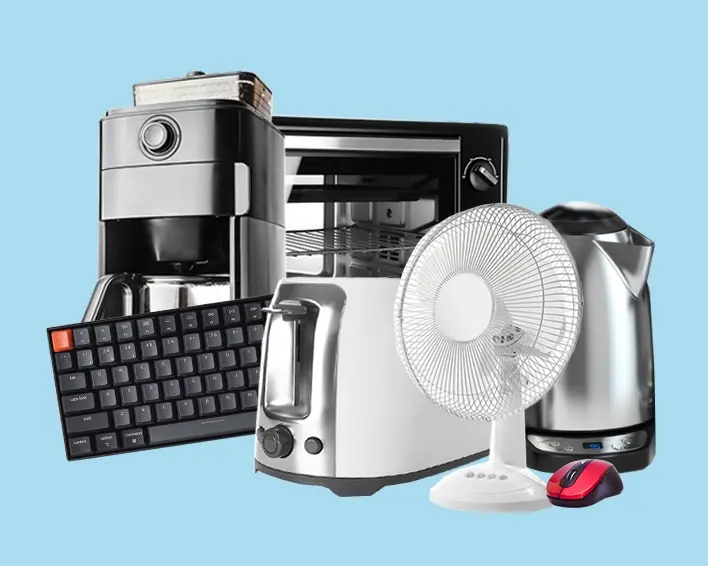
Also referred to as WEEE (Waste Electrical and Electronics Equipment) or electrical waste, your business e-waste is anything with a plug, battery or cable which has come to the end of its life. This includes all your organisation’s unwanted tech and electricals including computers, dishwashers, washing machines, kettles, photocopiers, TVs, batteries and lighting. E-waste is generally classed as ‘hazardous’.

What are my e-waste obligations as a business?

Once your organisation decides not to reuse your IT and electricals, they officially become e-waste. All organisations have a legal duty of care to safely manage their e-waste – from the moment it’s created until it’s finally disposed of. This covers all e-waste that you produce, import, keep, transport, treat, dispose of or have control of. You remain responsible for your e-waste until you have transferred it to an authorised person for taking away and processing. Business waste must be handled separately from domestic waste. This is part of the Environmental Protection Act (EPA) that was established in 1990, and updated in 2008. Taking business e-waste home for disposal with your domestic waste breaches the EPA.

If you produce, distribute or sell electricals you also have a legal obligation to help your customers recycle their unwanted tech and electricals. Read our Industry briefings.

The bottom line is, if you fail to comply you’ll be faced with a fine, and for severe cases where you end up in court, that fine is unlimited.

How do I manage my e-waste?

You must report and safely dispose of your e-waste through approved e-waste management systems; it forms part of your carbon footprint under scope 3 emissions.

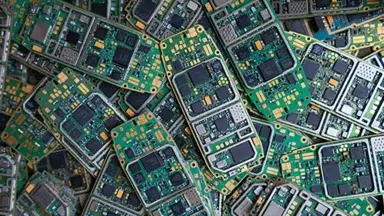
Top shot of a pile of mobile phone circuit boards, cutout on blue background

The original manufacturer

The original producer of your electrical equipment has a legal obligation to take back and recycle those items at their ‘end of life’. Contact them directly for more details.
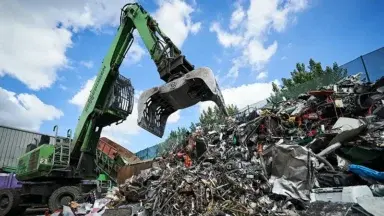
green digger outside in a recycling centre with open grabber about to pick up electricals from a mound of electrical items

Waste management company

Contact your waste management company, or check our approved list below if you need to sign up to one still. Approved waste management companies are licensed to collect, transport and recycle your e-waste.
Find a waste management company
Photo showing Recyling Centre directional sign, cutout on blue background

Approved e-waste recyclers

Find a drop off point for your business e-waste at your local authority sites or find an Approved Authorised Treatment Facility (AATF) who are approved to recycle e-waste. Contact them to find out about what they accept, and how much they charge.
Find an approved recycler

How can I minimise my e-waste?

The top of a paper shopping bag, cutout on blue background

Procurement – demand circularity

Work with suppliers with strong environmental practices to reduce your impact – and check for evidence of their WEEE compliance. This will also reduce your indirect (Scope 3) carbon footprint.
Shortlist three suppliers and check out their environmental credentials before buying.

man with a laptop ready to audit their business electricals

Audit your business electricals

Conduct a clear, current inventory of all IT and electrical equipment . Accurately tracking the asset’s age, condition, and location simplifies planning for future maintenance, reuse, or compliant recycling . This proactive approach ensures assets are managed efficiently before they become an emergency waste stream. Our goal is to make it easy for everyone to understand how to act .

Photo shows pale skinned hands repairing a mobile phone, cutout on blue background

Maximise your tech lifespan

If repairing your tech is no longer an option, your company has the duty of care to ensure they are disposed responsibly, safely, and in accordance with environmental regulations. Look for a compliant and certified IT Asset Disposition (ITAD) company . They refurbish and recycle IT. Some also run digital inclusion projects.
Find a local donation option

Photo shows a circular bundle of domestic cables, cutout on blue background

Design for longevity

If you’re a producer of electricals, consider the materials, design and business model to maximise longevity of your products and services . Design robust, modular products, ensure they allow for
easy disassembly and repair , and provide affordable spare parts and long-term software updates to prevent functional obsolescence .

The benefits of compliance

Responsibly managing your e-waste doesn’t just help reduce environmental impacts, it also brings business benefits

Photo shows female hands holding young plant in soil, cutout on blue background

Brand reputation

People increasingly expect organisations to take the lead on sustainability. Taking action helps show your customers, employees and stakeholders that you’re serious about your CSR and ESG commitments.

Photo shows checklist with green ticks, cutout on blue background

Stay compliant

Meeting your environmental obligations is part of de-risking your organisation and makes it easier to keep ahead of future regulations.

Photo shows two male dark skinned hands shaking, cutout on blue background

Attract talent

More and more of us want to work for responsible companies — especially younger generations who want to work for socially and environmentally driven organisations. The result? more engaged, happier and more fulfilled employees who feel their work is making a positive impact.

Photo shows older man looking at a moble phone, cutout on blue background

Reduce digital exclusion

Donating old tech helps close the digital divide, enabling people currently without tech to carry out basic tasks like finding a job, or enabling their children to do their homework. Sign up to the Government’s IT Reuse for Good charter and commit to donating your pre-loved tech to change people’s lives.
IT Reuse for good Charter


Some of our Partners